We don't often think of theology as dangerous. It can feel like the domain of scholars and seminarians — abstract, intellectual, removed from the pressing realities of injustice, identity, and pain. But this is a dangerous illusion. Theology is not just about what we think of God; it determines how we live with one another. It shapes our beliefs about who belongs, who matters, who deserves help, and who can be discarded. When theology is twisted — when it reflects fear, exclusion, or the need to control — it distorts our view of humanity itself. It teaches some to see themselves as inherently unworthy, others as superior, and still others as condemned. And when that distorted theology is dressed up in divine authority, the harm it causes is profound: children grow up believing they are abominations, abuse victims are told to forgive and submit, Black and brown bodies are systemically devalued, and entire communities are driven out of churches that should have been their refuge.
Theology is never neutral. It seeps into pulpits and policies, catechisms and courtrooms. It influences how pastors counsel, how parents discipline, how schools exclude, and how governments rule. And when that theology is rooted in hierarchy rather than humility, in certainty rather than compassion, in fear rather than love — it wounds. Deeply. Not in the abstract, but in the lived reality of people who are silenced, shamed, and pushed to the margins in the name of God. Real people carry real scars from bad theology — emotional, psychological, and sometimes even physical. The Church cannot afford to pretend that theological ideas are harmless. They have shaped empires, fueled colonization, justified slavery, subjugated women, and driven countless individuals to despair. If our theology doesn't bring life, it brings death. And it's time we reckoned with the cost.
When Doctrine Becomes Dangerous
Consider Martin Luther — a theological reformer who reshaped Christianity by re-centering the gospel on grace. And yet, near the end of his life, he authored On the Jews and Their Lies, a toxic, hate-filled manifesto. He called Jews "poisonous worms," advocated for the burning of synagogues, and laid theological groundwork later weaponized by the Nazis. Luther's legacy reminds us: even those who bring insight can cause immense harm when their theology is shaped by fear or control instead of love. When theology goes unchecked — when it's not held accountable to compassion — it can justify the unthinkable.
This isn't an isolated case. Scripture has long been misused to sanction violence and exclusion. One verse — "Do not allow a witch to live" (Exodus 22:18) — ignited witch hunts that led to the torture and execution of thousands, mostly women. The so-called "curse of Ham" justified slavery and white supremacy. Deuteronomy 23:2 was used to stigmatize children born outside of marriage. These aren't just ancient missteps; their echoes still shape theologies that divide, condemn, and exclude.
This is the cost of bad theology: fear, shame, and systemic harm disguised as faithfulness. When we interpret Scripture without context, compassion, or Christ at the center, we risk turning sacred words into weapons. Doctrine becomes more important than people. Certainty overrides humility. And the result isn't just confusion — it's deep, lasting damage.
We see it today in churches that once defended apartheid and segregation. But we also see it in subtler ways: in teachings that tell women to submit to abuse, that shame LGBTQ+ people into silence, that pressure survivors to suppress their pain. When theology teaches people to distrust their questions, deny their identity, or remain in harmful systems out of fear of rebellion, it doesn't lead to freedom — it leads to spiritual trauma.
Step into the shoes of an LGBTQ+ person raised in a conservative Christian home. Imagine the quiet unraveling that begins the moment they realize their identity doesn't align with what their church has labeled "biblical." The language of love they've heard from the pulpit begins to ring hollow when paired with selective verses weaponized against them. Leviticus 18:22 is quoted with certainty and severity, while other verses from the same chapter — prohibitions against eating shellfish, mixing fabrics, or shaving — are quietly brushed aside. What's being upheld is not biblical consistency, but cultural comfort cloaked in theological authority.
When lives are on the line, we're no longer debating ideas — we're confronting malpractice.
And the damage is staggering. This isn't just about doctrinal disagreement — it's about deep psychological and spiritual harm. LGBTQ+ youth from non-affirming religious environments are significantly more likely to experience depression, anxiety, and suicidal thoughts. For them, the church — meant to be a sanctuary — becomes a place of shame and trauma. Instead of meeting them with the love of Christ, many are met with rejection, silence, or conditional acceptance that leaves lasting scars.
Bad theology isn't just a matter of interpretation. It's the difference between feeling known or erased, between being welcomed or cast out, between choosing life or being pushed toward despair. And yet, churches often reduce these stakes to "differences of opinion," as if theological nuance outweighs human suffering. But when lives are on the line, we're no longer debating ideas — we're confronting malpractice.
The tragedy is that it's not only individuals who are wounded. Entire generations are walking away from the Church — not out of rebellion, but out of heartbreak. Many still love Jesus. They long for a community that reflects His grace and inclusion. But they cannot reconcile the message of divine love with the exclusion and judgment they see practiced in His name.
When churches teach that faithfulness means unflinching allegiance to inherited interpretations — rather than a living, breathing relationship with Christ — people don't just lose trust in the Church. They begin to question whether God Himself can be trusted. Scripture becomes a tool of fear instead of a fountain of life. And the pulpit, instead of being a place where burdens are lifted, becomes the very place that adds to them.
Misusing Scripture, Losing People
The crisis of credibility facing the modern Church is not, as some claim, the inevitable result of rising secularism or cultural decline. It's the result of the Church's own failure to reflect the love, grace, and humility of Jesus. People are walking away from faith because the image of God they've been handed is often violent, inconsistent, or cruel. When they open the Bible and find stories of God commanding genocide, or hear pastors defend slavery, patriarchy, and exclusion in His name, they don't encounter divine mystery — they encounter moral confusion. They're left asking: If this is God, how could I ever trust Him?
We've trained people to memorize verses but not to wrestle with meaning. We've taught children about Noah's Ark with coloring pages and cartoon animals — while skipping over the mass drowning of humanity that underpins the story. We've recited proof texts about sin and salvation without ever teaching how Scripture was shaped by culture, context, and human limitation. We've handed out absolute statements without the tools of discernment. And then we act surprised when people grow up, begin asking honest questions, and find our answers shallow or dismissive.
We can't fix this with louder music, edgier sermons, or artisanal coffee. People aren't leaving because church doesn't feel relevant. They're leaving because it doesn't feel real. They're leaving because we haven't been kind enough, honest enough, or loving enough. Because instead of meeting doubt with compassion, we've met it with defensiveness. Instead of sitting in the tension of mystery, we've rushed to protect certainty.
When churches cherry-pick Scripture — highlighting verses that align with their institutional values while ignoring those that challenge their power — they reduce a rich, complex, God-breathed library of texts into a string of doctrinal soundbites. The Bible becomes less a source of wisdom and more a tool for control. This doesn't deepen faith — it diminishes it. It teaches people to mistrust their instincts, suppress their questions, and fear the God they're supposed to love. And eventually, many decide that if loving God means abandoning their moral compass or their deepest sense of justice, they'd rather walk away.
To take the Bible seriously is not to wield it as a weapon, but to hold it with reverence and responsibility. It is to honor its depth, its contradictions, its humanity, and its divine intent. We must stop pretending that Scripture interpreted without love can still reveal the God who is love. Because when people lose trust in the character of God, they won't keep showing up just to sing songs about Him. They'll walk. And many already have.
Heretics and Holy Disruptors
Ironically, it's often those labeled "heretics" who help the Church find its soul again. Jesus Himself was accused of blasphemy and heresy by the religious elite of His day. Not because He denied God, but because He embodied God in ways that broke their categories — healing on the Sabbath, dining with outcasts, forgiving sins, and placing love above law. Peter, too, faced fierce opposition when he dared to baptize Gentiles, violating the purity codes that once defined belonging. Galileo was condemned for insisting that the Earth revolves around the sun — a claim that, while scientifically sound, threatened a theological structure too rigid to evolve. Beyers Naudé, a white South African pastor, was excommunicated and vilified by his denomination for speaking out against apartheid and exposing the theology that undergirded systemic racism.
These weren't enemies of the Church. They were its reformers. They loved the Church enough to confront it. They believed too deeply in the gospel to let it be twisted by fear, nationalism, or legalism. They saw where Christ was being eclipsed by control — and they spoke up. They put conscience over comfort, conviction over conformity, truth over tradition. Their path was often costly: loss of reputation, relationships, and roles. But their courage carved out space for the gospel to breathe again. They became the prophets we revere in hindsight — those who were right too soon.
The pattern continues. Reform rarely comes from the center of power. It is born on the margins — from women pushing against the stained-glass ceiling to pastors who dare to bless same-sex couples, to theologians reimagining God in ways that include rather than exclude. These voices are still too often dismissed as divisive or dangerous — not because they lack faith, but because their faith refuses to be confined by old fears. Yet history tells us the Church has always needed these brave disruptors. Not to destroy the Church, but to save it from shrinking into irrelevance, from hardening into dogma, from losing the heart of Christ.
When we confuse loyalty to tradition with loyalty to God, we resist the very Spirit we claim to follow. But courageous reformers show us a different way. They remind us that true faithfulness sometimes looks like dissent. That holiness sometimes looks like disruption. That the Spirit of God still moves — still challenges, still speaks, still reforms. And thank God for that. Because if the Church is to have a future, it will be because someone dared to ask, Is this still what Jesus looks like? and had the courage to change when the answer was no.
Love: The Ultimate Litmus Test
So, how do we know whether a theology is good or bad? The Bible gives us a remarkably clear, radical standard: "God is love" (1 John 4:16). Not control. Not condemnation. Not tribalism or fear. Love. This isn't soft or sentimental — it's the central revelation of who God is. Love is not one of God's many attributes; it is the essence of His nature. And if our theology doesn't reflect that love, then no matter how orthodox or historical it may seem, it is missing the mark.
If our theology leads us to shame others, to marginalize them, to preserve hierarchies that keep people out — it is not of God. If it causes fear, erodes dignity, or places barriers between people and the grace of Christ, then it is bearing bad fruit. But if it leads to compassion, justice, reconciliation, and belonging — if it dignifies the image of God in the other — it reflects the heart of the gospel.
Jesus showed us that the highest form of holiness is not doctrinal precision, but radical, embodied love.
Jesus modeled this hermeneutic with astonishing clarity. He healed on the Sabbath, not to defy the law but to fulfill it with love. He touched those the law called unclean. He dignified women in a culture that erased them. He forgave sinners before they repented. And when He quoted Leviticus, it wasn't to weaponize it — but to elevate its heart: "Love your neighbor as yourself." Jesus was never interested in rule-keeping for its own sake. He cared about whether those rules drew people closer to the Kingdom — or pushed them away.
We must ask ourselves: Does our reading of Scripture move us toward healing or toward harm? Does it make room for people to flourish, or does it force them to contort themselves to fit outdated molds? Jesus showed us that the highest form of holiness is not doctrinal precision, but radical, embodied love. The kind of love that flips tables when systems oppress and kneels in the dirt when someone is about to be stoned.
Reformation, then, is not betrayal — it is reverence. It is an act of holy humility. It is saying: we believe God is not finished speaking. We believe the Spirit is still leading. We believe truth is not a fossil to be preserved, but a living reality unfolding in love. But it begins with honesty. It begins with repentance — not in vague, safe terms, but with real confession. Real accountability. Real change.
We must examine every cherished belief and ask: Is this still bearing good fruit? Does this still look like Jesus? If not, it's time to let it go. This is not a call to dismiss Scripture. It's a call to take it seriously — so seriously that we refuse to use it as a weapon and insist on reading it through the lens of the One who is the Word made flesh.
A theology that harms others is not a theology worth preserving. And if reform means being misunderstood or criticized, so be it. The Church has never been transformed by those who chose comfort over courage. It was born through reformers who risked everything to recover the beating heart of the gospel: love.
A Gospel Worth Believing
The gospel is not about control. It's about liberation. It's not about certainty. It's about trust. It's not about defending tradition for its own sake. It's about embodying a love that disrupts, heals, and sets people free. At its core, the gospel invites us into a life that looks like Jesus — not a rigid system of belief, but a living, breathing way of compassion, courage, and welcome.
Jesus came not to protect power but to dismantle it. Not to uphold religious gatekeeping, but to tear down the fences that kept people out. He came not to shame the broken, but to stand with them, heal them, and call them beloved. He didn't silence questions — He welcomed them. He didn't demand blind conformity — He called people to think, to feel, to follow in love. If our theology doesn't look like Jesus — if it doesn't make room at the table, bind up the wounded, and elevate the voices long ignored — then it doesn't look like God.
Let us be heretics if we must — so long as we are faithful to the God who is love.
To follow Christ is to embrace the long, courageous work of reform. To sit in discomfort. To unlearn what harms. To resist the temptation to preserve our comfort at the expense of someone else's dignity. It takes humility to admit that we may have been wrong. It takes maturity to allow faith to grow. And it takes bravery to begin again — not with bitterness, but with love as our guide.
The Church is at a crossroads. Many have walked away — not because they've lost faith in God, but because the image of God they were handed was too small, too angry, too conditional to be trusted. The cost of bad theology has never been higher. If we love the Church, we must be willing to change it. Let us be heretics if we must — so long as we are faithful to the God who is love. Let us be reformers, not because we despise what was, but because we believe something better is possible.
Theology can heal. But only if we allow it to breathe again — if we let it speak not only from pulpits but from the pain of the people, the questions of the doubters, and the cries of those who've been left out for too long. It will take courage to love louder than we've judged, and to reform faster than we've hurt. But this is the call. And perhaps, most importantly, we must never stop asking: What kind of fruit is our theology producing? If it does not bring forth justice, mercy, humility, and love, then it is not the theology of Jesus. Reform, then, is not a betrayal of faith — it is its fulfillment. It is the path to life.
Let us walk it boldly, with compassion in our hearts and courage in our hands, until the Church begins to look less like fear — and more like Christ.
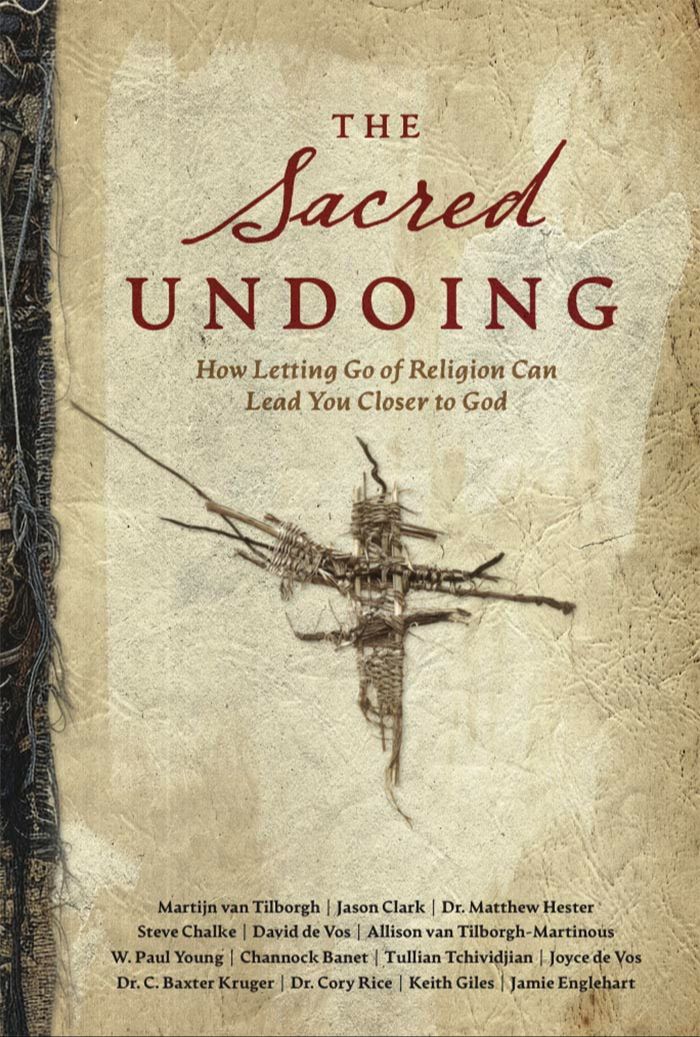
Adapted from The Sacred Undoing by Martijn van Tilborgh (Sanford, FL: Four Rivers Media, 2025).
Join the Conversation
Receive thought-provoking articles that challenge conventional thinking, delivered to your inbox every week.
No spam. Unsubscribe anytime.
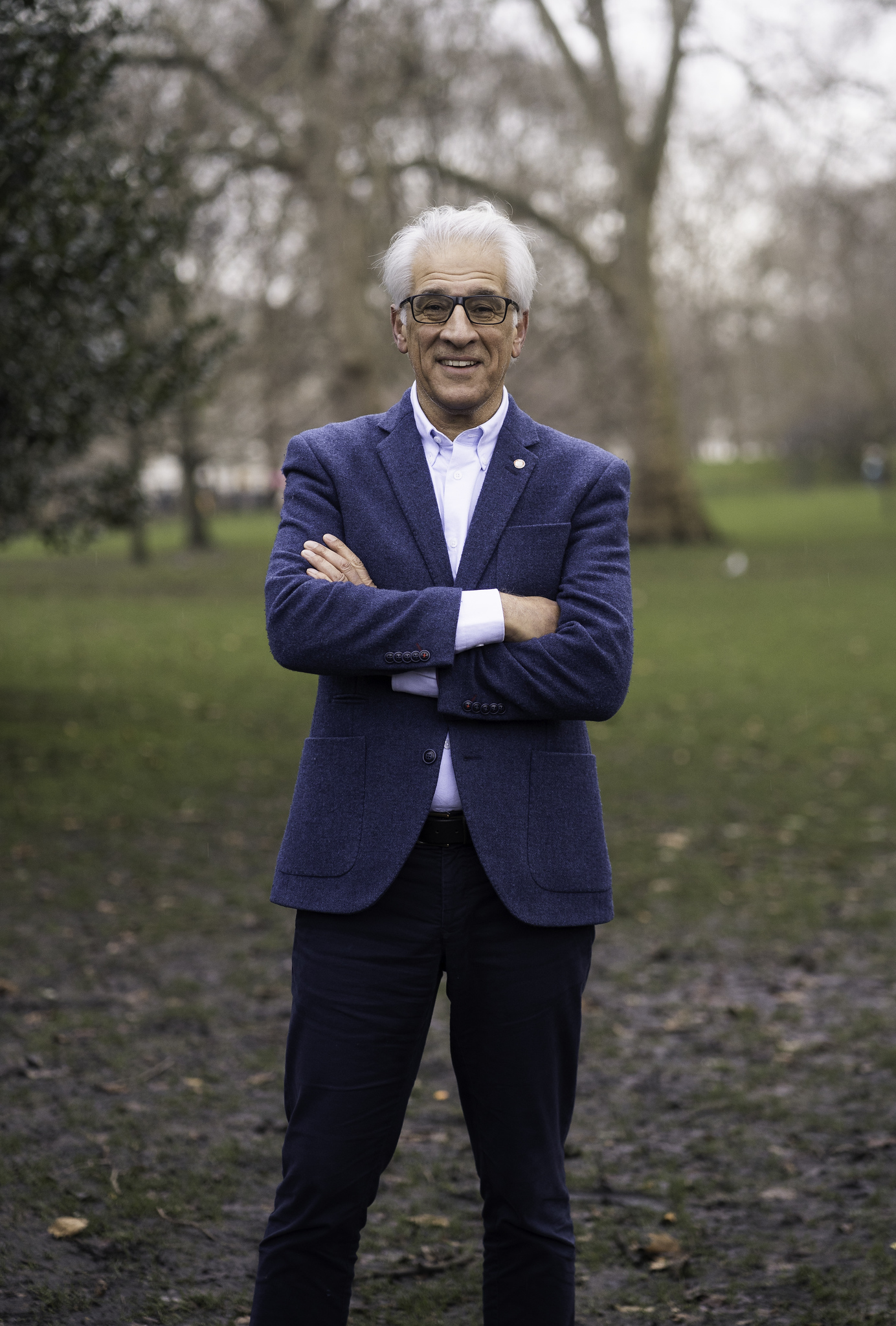
Revd Steve Chalke, MBE
Steve Chalke is a social entrepreneur, justice campaigner, author, motivational speaker, and church leader who founded Oasis Trust in 1985 — now a global network of charities employing over 6,000 staff and thousands of volunteers. Also serving from 2003 for 20 years as Founding Minister of Oasis Church, Waterloo, and from 2007 for 8 years as a UN Special Advisor on Human Trafficking, Steve has dedicated his life to advancing social inclusion through housing, education, healthcare, and community development. Recognized with an MBE, multiple honorary fellowships and doctorates for his contributions to justice and inclusion, he continues to lead Oasis's work across 86 neighbourhoods worldwide, fostering communities where everyone is valued, supported, and able to thrive.
Comments
We'd love to hear from you.
Create a free account or sign in to join the conversation — it only takes a couple of clicks.
Sign In / Create AccountNo comments yet. Be the first to share your thoughts.