A thousand years ago, according to legend, Prince Vladimir, the pagan monarch of Kiev, was in search of a new religion to unite the disparate tribes in the land of Rus. Delegations were sent throughout the world to investigate the various religious options and returned to report their findings. Some had found religions that were dour and austere; others found religions that were arcane and esoteric. Religions of various legalisms and moralisms abounded. Some forbade wine, while others prohibited the eating of meat.
When the delegation that had journeyed to Constantinople reported what they had found, they told the Prince, “When the Christians took us into Hagia Sophia, their great house of worship, we no longer knew if we were on earth or in heaven—there was so much beauty. They told us many things about their religion and most of it we have forgotten, but we can never forget such beauty.” In response to their report Prince Vladimir said, “Give me the beautiful religion.” And this is how Christianity came to Russia a thousand years ago.
Nine hundred years later the great Russian novelist Fyodor Dostoevsky wrote The Idiot. Much of the novel is Dostoevsky’s attempt to create a perfect soul in the character of Prince Myshkin, a young man so immune to the conniving aspirations of Russian high society that he is called an idiot 45 times throughout the novel.
But Prince Myshkin is not an idiot. He is simply a man motivated by altruistic love instead of the class-conscious ambition of his peers. In the novel people call Myshkin an idiot while talking about him among other members of the snobbish St. Petersburg elite, but when they are alone with the prince, they sense his genuine humility and selfless compassion and seem to find solace in his presence.
Dostoevsky’s Prince Myshkin is, in fact, a Christ figure. The most famous line in the novel comes from a scene at a party where a drunken nihilist taunts Myshkin, saying, “‘Is it true, Prince, that you once said, ‘beauty would save the world?’ Gentlemen, the prince insists that beauty will save the world! What beauty will save the world? Are you a zealous Christian?’”
In the overall development of the novel this is an insignificant episode, but from the moment The Idiot was published in 1869, Dostoevsky’s enigmatic phrase “beauty will save the world” has captured the imagination of thinkers, philosophers and theologians around the world.
In 1970 Aleksandr Solzhenitsyn was awarded the Nobel Prize for literature, and in his Nobel lecture Solzhenitsyn said that Dostoevsky’s “beauty will save the world” was not a careless phrase but a prophecy. When Dostoevsky introduced “beauty will save the world” into the lexicon of religious and philosophical thought through the character of Prince Myshkin, he was clearly pointing us to the beauty of Christ.
The Greek philosophers Plato and Plotinus spoke of the True, the Good and the Beautiful as ultimate values—sometimes referred to as the transcendentals. By speaking of the True, the Good and the Beautiful as ultimate values, Plato and Plotinus meant that these attributes are self-justifying; they need serve no other end—they transcend the tyranny of the utilitarian. The True is desired because it is true. The Good is desired because it is good. The Beautiful is desired because it is beautiful. We are to desire what is true, good and beautiful for no other reason than it is true, good and beautiful. A life lived in accord with the transcendentals is a life well-lived.
Eventually the transcendentals of Plato and Plotinus began to inform the Christian theology of the early church fathers. Theologians like Origen, Gregory of Nyssa and Maximus the Confessor recognized that the transcendentals are ultimate values because they are attributes of ultimate transcendence itself—God. God is the True, the Good and the Beautiful in ultimate perfection. Thus the True, the Good and (to a lesser extent) the Beautiful were given their own categories in Christian thought.
Christian apologetics is the defense of the truth of Christ. Christian ethics is the attempt to define what is good in the light of Christ. And it’s clear to see that apologetics and ethics have a long and venerable tradition in the history of the church. But what about Christian aesthetics—the formation of beauty as revealed in Christ? Here the church has been more hit and miss. There have been times when the church has placed a high value on beauty, but at other times (especially in modernity) the church has tended to dismiss beauty as mere adornment.
In our present moment beauty may be the best way forward in our witness to the world.
Much of the modern church regards beauty as an optional accoutrement and not an ultimate value. Beauty is sacrificed on the altar of pragmatism. This is a mistake that needs to be corrected because in our present moment beauty may be the best way forward in our witness to the world.
Christian apologetics (done well and not at the hands of fundamentalist pop apologists) is a valid exercise that will always have its place. Christian ethics is ever an ongoing project that cannot be abandoned. Nevertheless, we live in a time when the wider world is deeply suspicious of any claim regarding ultimate truth or a superior ethic—especially when made by the church.
If the church in the secular West takes its stand in the marketplace of ideas by announcing, “We have ultimate truth, we know what’s good for you and we meet at ten o’clock on Sunday morning,” the response will mostly be somewhere between shoulder-shrugging indifference and outright scorn.
The avenues of truth and goodness may, for now, be largely closed to the traffic of evangelism. But what about beauty? What if evangelism could not be easily dismissed as petulant argument or puritanical moralism because it came by the way of aesthetics? Beauty has a way of sneaking past our defenses. As Miguel de Cervantes observed in Don Quixote, “It is the prerogative and charm of beauty to win hearts.”
If in our witness to the world we can set forth the incomparable beauty of Christ, and if we can learn to live lives that reflect this beauty, hearts can be won, even in a milieu of skepticism and cynicism. It’s through beauty that we fall in love, not through reason, not through argument. The hope for evangelism in the post-Christian West of the 21st century is to trust in the beauty of Christ to win hearts. Let us tell our beautiful story and attempt to live beautiful lives.
In evaluating what we do in our churches and ministries, we are accustomed to asking two questions: Is it true? Is it good? But now we need to ask, and perhaps prioritize a third question: Is it beautiful? It’s not enough to say our cause is true, our intent is good and then charge into battle under the twin banners of truth and goodness. The manner in which we seek to advance truth and establish goodness must be perceived as beautiful. Apologetics and ethics done in an ugly way is incompatible with the beauty of Christ. What we do in the name of Christ must be done in a beautiful way.
For this to happen we need some concept of what constitutes the beautiful, but beauty is famously difficult to define. Aristotle defined beauty in terms of order, symmetry and definiteness. And while I’m not inclined to argue with Aristotle, that hardly seems to capture what we mean when we describe something as beautiful. A glorious sunset may lack order and symmetry but still be unmistakably beautiful. We know beauty when we see it, even if a tidy definition eludes us.
Where I concur with Aristotle is that whatever beauty is, it has something to do with form. Whether it’s painting or poem, sculpture or song, novel or film, architecture or dance, form is central to the achievement of beauty. The skillful arrangement of color, word, stone, music, plot, structure or movement into that which is aesthetically pleasing is what constitutes beauty.
So what is the form of Christian beauty? The answer should be obvious—the cruciform. Our standard of beauty is the cross. Christ upon the cross, arms outstretched in proffered embrace, forgiving the world—this is the heart of Christian aesthetics. This is the beauty that saves the world.
Christ upon the cross is paradoxically the clearest revelation of who God is.
The strange fact that the crucifixion of Jesus of Nazareth can be depicted in terms of artistic beauty bears witness to the triumph of the gospel. Andrea Mantegna’s Crucifixion in the Louvre and Fra Angelico’s crucifixion frescos in Florence are just some of the best examples of the crucifixion of Christ depicted in terms of artistic beauty. But consider what a stunning accomplishment this is.
Needless to say, when the Romans crucified their victims, they weren’t trying to create art. Roman crucifixion was a spectacle so ghastly that it psychologically terrorized an occupied populace, and that was the intent. Crucifixion was made as public and as abhorrent as possible to quash any idea of revolt. And this is precisely why the crucifixion portrayed in terms of beauty is such a profound theological insight.
Golgotha is the ultimate juxtaposition of the grotesque and the beautiful. Obviously, crucifixion is ugly—nailing a naked man to a tree to hang there until he succumbs to a tortuous death is horrifyingly ugly. But that’s not all that is present at the crucifixion of Christ. There is also a beauty most sublime. “Father, forgive them, for they know not what they do.” This is the beauty that saves the world.
If all we see in the crucifixion of Jesus of Nazareth is the raw data of a Galilean Jew executed by the Roman Empire under Pontius Pilate, we have failed to understand it. Only the theological beauty of the cross makes the artistic beauty of Mantegna’s Crucifixion possible. For being disguised under an ugly crucifixion and death, Christ upon the cross is paradoxically the clearest revelation of who God is.
The transformation of the Roman cross from an abhorrent symbol of death into a beautiful symbol of love is a testament to the redeeming power of Christ. If the cross can be redeemed, the world can be redeemed. If crucifixion can be made beautiful, all things can be made beautiful. The hope we have for the healing of a world marred by sin and death is that God makes all things beautiful in its time.
When artists depict the crucifixion of Christ in terms of aesthetic beauty, they are not only calling our attention to the beauty of God’s redeeming love, but they are also depicting our eschatological hope. If our churches and ministries can learn to enact the beauty of Christ and thereby become pavilions of peace instead of trenches in an ugly culture war, we can begin to recover our swiftly diminishing relevance.
The beauty of the cruciform love of Christ is the beauty Christians are called to emulate. The cruciform is to be our posture within the world. We are to be present in society, not with the clenched fist of protest, not with the wagging finger of shame, not with the pointing finger of accusation, but with arms outstretched in imitation of our crucified Lord.
When we become angry combatants and arrogant accusers, we become ugly—we take on the hideous and diabolical form of the arch accuser. But when we enact cruciform love, when we “put on the Lord Jesus Christ,” we begin to reflect redeeming beauty into the world. The extent to which our posture is cruciform is the extent to which we possess the attractive beauty of Christ. It’s not our anger that will save the world, but the beauty of co-suffering love.
When the church tries to change the world through political power, it doesn’t change the world, it simply becomes the world.
And yet we are tempted to prioritize the very thing that will most mar the beauty of Christ among us: the pursuit of political power. We tell ourselves we must have political power to change the world and then hurl ourselves into a fray that is bound to make us ugly. J.R.R. Tolkien has shown us how the One Ring corrupts all who try to cling to it; we desperately need to learn this most essential lesson from The Lord of the Rings.
Our initial impulse to possess the Ring of Power comes from the assumption that it is our task to change the world. It is not. Jesus is the savior of the world, not us. Our task is much more modest: to simply be that part of the world already transformed by Christ.
Esteemed American theologian Stanley Hauerwas says the first task of the church is to make the world the world. In other words, before the church can change the world, it must be something other than the world. The fallen world under the sway of the evil one is enamored with military and economic might and the political power that controls it. But none of this bears any resemblance to what Jesus Christ called the kingdom of God. When the church tries to change the world through political power, it doesn’t change the world, it simply becomes the world—the world in pursuit of political power with a thin veneer of religion.
Of course the early church did “turn the world upside down,” but not by the conventional means of political power. The early church proclaimed that a Galilean Jew crucified by Pontius Pilate had been raised from the dead and installed by God as the world’s true emperor… and it didn’t matter at all who happened to wear the imperial purple in Rome.
When the early church boldly confessed, “Jesus is Lord” they were tacitly implying “Caesar is not.” But they also knew that the reign of Christ was nothing like the reign of Caesar, because the kingdom of Christ is without coercion. The church didn’t need the Roman legions because it had its army of martyrs. The followers of Christ persuade by love, witness, Spirit, reason, rhetoric and if need be, martyrdom—but never by force. When we seek to force Christian faith through the political apparatus of the state we depart from the cruciform beauty of Christ.
The church has been given the keys of the kingdom, and we have no need for the sword of Caesar. Our presence in the world is not to be marked by the power of force but by the grace of forgiveness. We are to walk the world as the pardon of God, not fight for power to rule the world.
We know what is beautiful. Just as we instinctively recognize beauty in nature—majestic mountains, a sublime sunset, a shimmering lake—we also recognize what is truly beautiful in humanity. Grace is beautiful. Mercy is beautiful. Humility is beautiful. Kindness is beautiful. These qualities are beautiful because they bear the image of God. When we look at Jesus Christ in the Gospels, we behold all things beautiful in a single life. And this awakens a desire deep within us—a desire to participate in Christlike beauty. We don’t just want to behold beauty, we want to be beautiful. In his famous sermon “The Weight of Glory,” C.S. Lewis said it like this,
We do not want merely to see beauty, though, God knows, even that is bounty enough. We want something else which can hardly be put into words—to be united with the beauty we see, to pass into it, to receive it into ourselves, to bathe in it, to become part of it.
The good news is that this is the ultimate promise of the gospel; this is the final telos of the Christian—to share in the beautiful image of Christ, to “become participants in the divine nature.” The high calling of Christian leadership is to first bear the beauty of Jesus Christ and then coax others to imitate this beauty in their own lives. As we do this, we partner with God in the redemptive vocation of reconciling all things in Christ. Fyodor Dostoevsky was more than a novelist, he was a prophet. Indeed, beauty will save the world.
Join the Conversation
Receive thought-provoking articles that challenge conventional thinking, delivered to your inbox every week.
No spam. Unsubscribe anytime.
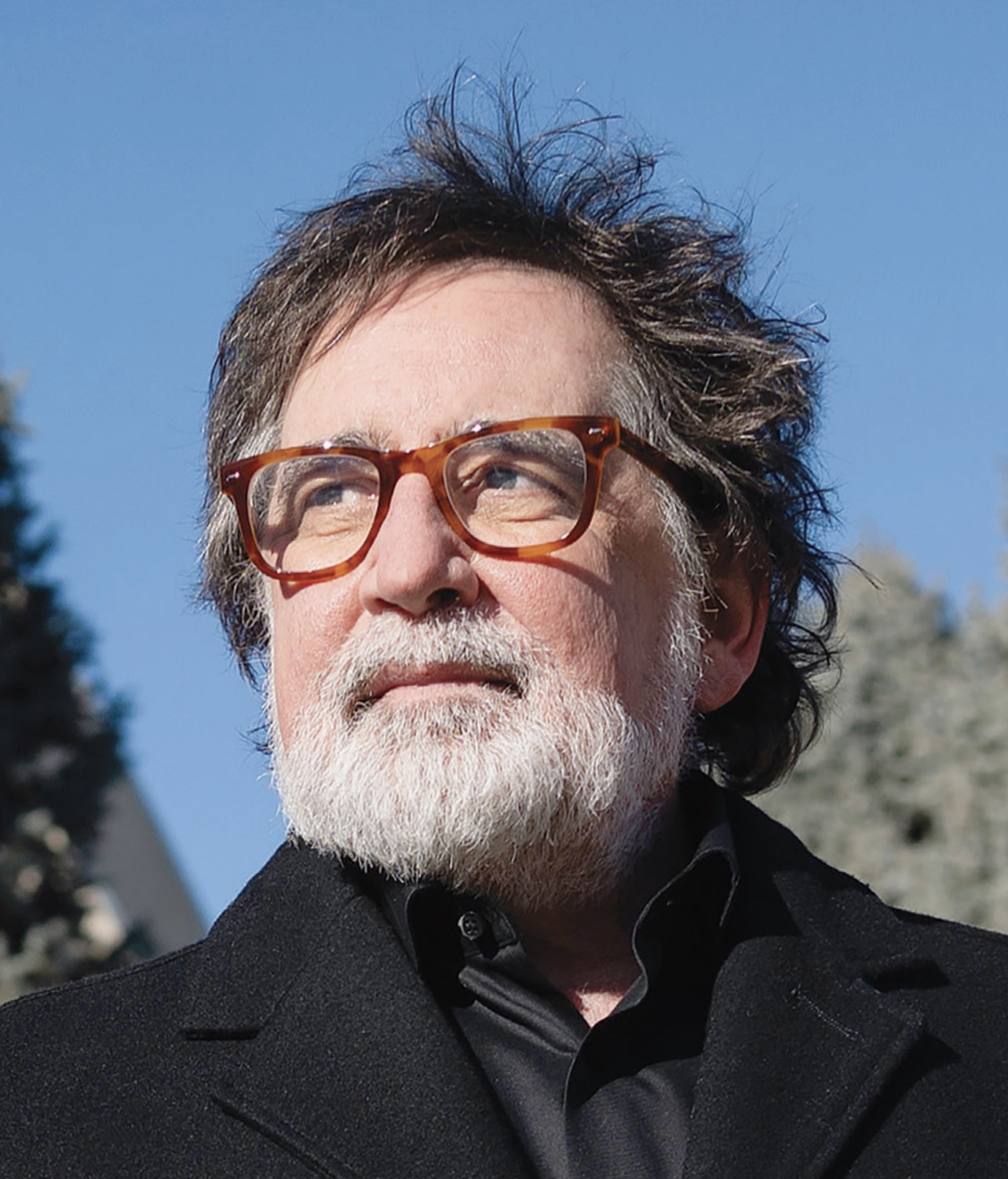
Brian Zahnd
Brian Zahnd is a pastor-theologian from St. Joseph, Missouri. He is the founding pastor of Word of Life Church and the author of 12 books, including Beauty Will Save the World, When Everything’s on Fire and most recently, Unseen Existences: Of Heaven, Earth, and the Divine Mystery in All Things. In 2024 St. Stephen’s University in New Brunswick conferred upon him an Honorary Doctorate of Divinity. Brian and his wife, Peri, are enthusiastic hikers and enjoy long walking pilgrimages, including walking the Camino de Santiago in Spain four times. They have three adult sons and eight grandchildren.
Comments
We'd love to hear from you.
Create a free account or sign in to join the conversation — it only takes a couple of clicks.
Sign In / Create AccountNo comments yet. Be the first to share your thoughts.